16 Stunning Photographs with Eyewitness Accounts to Help you Remember the Martyrdom on this 170th Anniversary

http://www.ldsmag.com/article/1/14541

By Scot Facer Proctor

To LIKE Meridian on Facebook, click here.  To subscribe to Meridian’s free updates, click here.

Even the coldest heart is moved by the events that took place in the Carthage Jail on Thursday, June 27, 1844—170 years ago today. Joseph died not only as a Prophet, Seer, and Revelator, but as a Mayor of one of the largest cities in America, General of the Nauvoo Legion (the largest city militia in the western United States), a declared candidate for President of the United States, and more tenderly, as a husband to Emma Hale Smith and father of eleven children (six then deceased, one yet unborn). Joseph died, as the Prophets of old, as a witness of the Savior of mankind. The following accounts are given to paint a picture of some of the feelings that surround that fateful day in June of 1844. I have added the photographs so you may journey with the Prophet Joseph and his brother Hyrum to Carthage.


Sixteen moves in seventeen years of marriage finally brought Joseph and Emma to this home in Nauvoo. They called it “the Mansion House” and who in their position wouldn’t? It had twenty-two rooms when completed. Joseph would only live here ten months.

“Willard, the time will come that the balls will fly around you like hail, and you will see your friends fall on the right and on the left, but there shall not be so much as a hole in your garment.”[1] (Joseph Smith to Willard Richards, Summer 1843)


Sun sets over the horseshoe bend of the Mississippi River near where Joseph, Hyrum, Willard Richards and Porter Rockwell crossed in a leaky skiff. After Joseph came from his family to leave, “his tears were flowing fast. He held a handkerchief to his face, and followed after Brother Hyrum without uttering a word.”[2]

“The last time I saw the Prophet, he was on his way to Carthage jail…They stopped..at the house of Brother Rosecrans. We were on the porch and could hear every word he said…one sentence I well remember. After bidding good-bye, he said to Brother Rosecrans, ‘If I never see you again, or if I never come back, remember that I love you.’ This went through me like electricity. I went in the house and threw myself on the bed and wept like a whipped child. And why this grief for a person I had never spoken to in my life, I could not tell. I knew he was a servant of God, and could only think of the danger he was in, and how deeply he felt it…”[3] (Mary Ellen Kimball on June 24, 1844)


Here by the front gate of their fence Joseph said good-bye to Emma and the children for the last time. “You will return won’t you?” Emma purportedly asked Joseph.

[Joseph looking at the Temple site and at the city of Nauvoo on the way to Carthage:] “This is the loveliest place and the best people under the heavens; little do they know the trials that await them.” [Sometime later that same day on the road to Carthage, Joseph said,] “I am going like a lamb to the slaughter, but I am calm as a summer’s morning. I have a conscience void of offense toward God and toward all men. If they take my life I shall die an innocent man…and it shall be said of me ‘He was murdered in cold blood.’”[4] (Joseph on the Martyrdom Trail, June 24, 1844)


The Temple walls were approximately 9 feet off the ground when Joseph rode by them on the way to Carthage. Joseph often prayed that he would see the completion of the house of the Lord. Surely that prayer was answered. But not on this side of the veil.

“Dear Emma, I am very much resigned to my lot knowing I am justified and have done the best that could be done. Give my love to the children and all my friends…you need not have any fears that any harm can happen to us…may God bless you all, Amen.”[5] (Handwritten Letter from Joseph to Emma 8:20 a.m., June 27, 1844)


Plowed fields of the original Joseph Smith Farm just outside Nauvoo not far from the Nauvoo Burial Grounds. Here Joseph stopped and gazed upon his land. As they rode away Joseph looked back over and over again. The men escorting him to Carthage told him to be moving on. Joseph said, “If some of you had got such a farm and knew you would not see it any more, you would want to take a good look at it for the last time.”[6]

“…the life of my servant shall be in my hand; therefore they shall not hurt him, although he shall be marred because of them. Yet I will heal him, for I will show unto them that my wisdom is greater than the cunning of the devil.”[7] (Jesus Christ to the Nephites, concerning Joseph Smith)


Summer afternoon on part of the original 26 ½ miles of the road from Nauvoo to Carthage, now called the Martyrdom Trail.

“We have had too much trouble to bring ‘Old Joe’ here to let him ever escape alive…You’ll see that I can prophesy better than ‘Old Joe,’ that neither he nor his brother, nor anyone who will remain with them, will see the sun set today.”[8] (Frank Worrell, Officer of the Guard of Carthage Jail, June 27, 1844)


Joseph, Hyrum, and the others, arrived at this place, the Carthage Jail, around midnight, Monday, June 24, 1844.

[Conversation between Joseph and Dan Jones in the Carthage Jail, past midnight on June 27, 1844:] “Brother Dan, are you afraid to die?” Joseph asked.

“Has that time come, think you?” Dan replied. “Engaged in such a cause, I do not think that death would have many terrors.” Joseph then said, “You will see Wales and fulfill the mission appointed you ere you die.”[9]


Some of Brother Dan Jones’ converts from his native Wales would later form a choir that would, over time, become the most famous singing group in all the world: The Mormon Tabernacle Choir.

Early that morning Dan Jones left the jail to meet with Governor Ford. He explained to the governor with great anxiety how the lives of Joseph and Hyrum were in great danger, and the threats that were made towards them, to which Governor Ford replied: “You are unnecessarily alarmed for your friends’ safety, sir. The people are not that cruel.”[10] Dan Jones returned to try to reenter the jail but was not allowed. His life was spared; he did fill his mission to Wales, as Joseph prophesied and brought untold thousands into the Church.


That Thursday, June 27, 1844 was especially hot and humid. The air was heavy and the brethren’s shirts were wet with perspiration.

Jailer at Carthage, George W. Stigall, heard of the impending danger to the lives of the prisoners (whom he admired and knew were innocent men) and suggested they go from his upstairs bedroom where they had been staying to the inner cell next to the bedroom where they would be safer. Joseph turned to Dr. Willard Richards and said, “If we go into the cell, will you go in with us?” The doctor answered, “Brother Joseph, you did not ask me to cross the river with you-you did not ask me to come to Carthage-you did not ask me to come to jail with you-and do you think I would forsake you now? But I will tell you what I will do: if you are condemned to be hung for treason, I will be hung in your stead, and you shall go free.” Joseph said, “You cannot.” Willard replied, “I will.”[11] Witnessing this loyalty, Joseph wept. (This conversation took place between Willard Richards and Joseph about 5:00 p.m., less than fifteen minutes before the brutal murders, June 27, 1844)


Original door of jailer’s bedroom still has the hole (right middle panel) where a ball from one rifle blasted through and hit Hyrum in the left bridge of the nose, felling him to the floor.

“A great crime has been done by destroying the Expositor press and placing the city under martial law, and a severe atonement must be made, so prepare your minds for the emergency.”[12] (Governor Thomas Ford, State of Illinois, June 27, 1844. This was said about the time of the martyrdom while he was in Nauvoo.)


The mob, with faces painted black, rushed up these stairs that fateful Thursday afternoon, rifles loaded, scores of deadly balls were fired through the doorway into the jailer’s bedroom where Joseph, Hyrum, Willard, and John were imprisoned. Numerous other shots whistled through the open windows.

“I felt a dull, lonely, sickening sensation…When I reflected that our noble chieftain, the Prophet of the living God, had fallen, and that I had seen his brother in the cold embrace of death, it seemed as though there was a void or vacuum in the great field of human existence to me, and a dark gloomy chasm in the kingdom, that we were left alone. Oh, how lonely was that feeling! How cold, barren and desolate! In the midst of difficulties he was always the first in motion; in critical positions his counsel was always sought. As our Prophet, he approached our God and obtained for us his will; but now our Prophet, our counselor, our general, our leader was gone, and amid the fiery ordeal that we then had to pass through, we were left alone without his aid, and as our future guide for things spiritual or temporal, and for all things pertaining to this world, or the next, he had spoken for the last time on earth.”[13] (John Taylor)


Hyrum lay dead on this floor. John had rolled under the bed after being hit with four balls, one of which struck him in the chest at the heart, but was miraculously stopped by his pocket watch. The watch stopped at 16 minutes, 26 seconds after 5 o’clock. Joseph tried to escape through the window on the left. He was hit four times, once in the collar bone, once in the breast, and twice in the back. He leaped or fell from the window crying aloud, “Oh Lord, my God.!”

“Had he [Joseph] been spared a martyr’s fate till mature manhood and age, he was certainly endued with powers and ability to have revolutionized the world…as it is, his works will live to endless ages, and unnumbered millions yet unborn will mention his name with honor, as a noble instrument…who…laid the foundations of that kingdom spoken of by Daniel, the prophet, which should break in pieces all other kingdoms and stand forever.”[14] (Parley Parker Pratt)


View of the outside of the Carthage Jail and the well where the mob placed the body of Joseph Smith and fired upon him in a brutal manner at point blank range. With walls between two and two-and-a-half feet thick, the seven-room Carthage Jail was considered by Governor Thomas Ford and others, “the only safe place in Hancock County for ‘Joe Smith.’”

“Joseph Smith, the Prophet and Seer of the Lord, has done more, save Jesus only, for the salvation of men in this world, than any other man that ever lived in it.

”[15] (John Taylor)


D.J. Bawden bronze of Joseph and Hyrum, the Prophet and Patriarch. At the Carthage Jail, at the time of the martyrdom, Joseph was thirty-eight years old and Hyrum, forty-four. “In life they were not divided, and in death they were not separated.”[16]

“After the corpses were washed and dressed in their burial clothes, we were allowed to see them. I had for a long time braced every nerve, roused every energy of my soul and called upon God to strengthen me, but when I entered the room and saw my murdered sons extended both at once before my eyes and heard the sobs and groans of my family…it was too much: I sank back, crying to the Lord in the agony of my soul, ‘My God, my God, why hast thou forsaken this family!’ A voice replied, ‘I have taken them to myself, that they might have rest’…I then thought upon the promise which I had received in Missouri, that in five years Joseph should have power over all his enemies. The time had elapsed and the promise was fulfilled.”[17] (Lucy Mack Smith, mother of Joseph and Hyrum, June 29, 1844, Nauvoo Illinois)

“My Dear Companion…We are in great affliction at this time. Our dear Br. Joseph Smith and Hyrum has fell victims to a ferocious mob. The great God of the Creation only knows whether the rest shall be preserved in safety or not…I have been blessed to keep my feelings quite calm through all the storm. I hope you will be careful on your way home and not expose yourself to those that will endanger your life. Yours in haste. If we meet no more in this world may we meet where parting is no more. Farewell.”[18] (Mary Ann Angell Young to her husband, Brigham Young, President of the Council of the Twelve Apostles, dated June 30, 1844)


It was from this window where the Prophet Joseph leaped trying to escape the jail or draw fire away from the others. The graze marks from the lead balls that were fired can still be seen in the window sill 170 years later.

“We would beseech the Latter Day Saints in Nauvoo, and else where, to hold fast to the faith that has been delivered to them in the last days, abiding in the perfect law of the gospel. Be peaceable, quiet citizens, doing the works of righteousness…Rejoice then, that you are found worthy to live and die for God: men may kill the body, but they cannot hurt the soul.”[19] (W.W. Phelps, W. Richards, John Taylor, July 1, 1844)

________________________________________________________________

[1] Smith, Joseph, History of the Church of Jesus Christ of Latter-day Saints, 7 vols. (Salt Lake City, Utah: Deseret Book Company, 1980), 6:619 (Hereinafter, History of the Church).

[2] History of the Church, 6:547.

[3] The Juvenile Instructor, 15 August 1892, 27: 490-91.

[4] History of the Church, 6:554-55.

[5] Personal Writings of Joseph Smith, ed. and comp. Dean C. Jessee (Salt Lake City, Utah: Deseret Book Company, 1984), 611.

[6] History of the Church, 6: 558.

[7] 3 Nephi 21:10.

[8] Dan Jones, “The Martyrdom of Joseph and Hyrum Smith,” 20 January, 1855, handwritten manuscript in the Church Historian’s Library, Salt Lake City, Utah.

[9] Ibid.

[10] Ibid. See also History of the Church 6:603.

[11] History of the Church 6:16.

[12] Ibid. 623.

[13] Ibid. 7:106.

[14] Pratt, Parley P. Autobiography of Parley P. Pratt, Revised and Enhanced Edition. Edited by Scot Facer Proctor and Maurine Jensen Proctor. Deseret Book Company, Salt Lake City, 2000, pp. 45, 46.

[15] Doctrine and Covenants 135:3.

[16] Ibid.

[17] Smith, Lucy Mack. Revised and Enhanced History of Joseph Smith by His Mother. Edited by Scot Facer Proctor and Maurine Jensen Proctor. Bookcraft, Salt Lake City, 1996, pp. 457, 458.

[18] Mary Ann Angell Young to Brigham Young, 30 June, 1844, dated at Nauvoo, Illinois, housed at Church Historian’s Library, Salt Lake City, Utah.

[19] Times and Seasons, vol. 5, no. 12, (l July 1844): 568
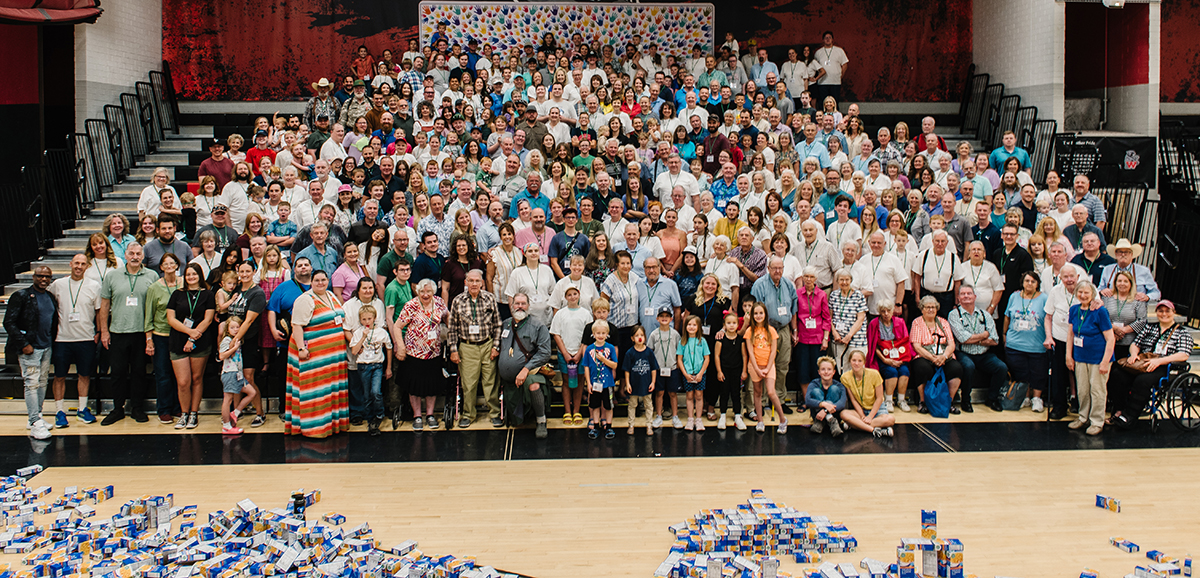
Reunion Service Project

Dear Family,

Independence, Missouri was chosen for the reunion this summer to celebrate important anniversaries in our family history; the dedication of the temple lot as well as one of the original Smith reunion held in Independence more than forty years ago. Our theme “Walking in their Shoes” will help us remember our Smith ancestors who lived in Missouri, their efforts to build Zion, and courage as they faced great trials.

Our Grandmother Lucy Mack wrote that while living in Missouri the Smith family numbered about 24. (Several of the Smith women were expecting babies.) Included in the group were eleven children eight years old and under.

Persecutions the family faced are difficult to imagine. Agnes Smith, wife of Don Carlos, waded the Grand River with her babies in arm after the mob burned their home to the ground. Within days of giving birth to a son, Samuel’s wife, Mary, was told she had to move immediately to Far West traveling alone in the rain in an open lumber wagon. These are just two examples illustrating their plight.

For some Missouri may be remembered as a place of sadness, in contrast, scriptures revealed to Joseph in Liberty Jail are a source of hope. We wish to share this hope through our family service project of collecting shoes for a women and children’s shelter in the Independence area. Your donation of new shoes or small contribution of cash will purchase shoes for young children and mothers in need, who have left their homes with little in hand, much like our Smith ancestors had to do.

As we serve together our family bond is strengthened and we become part of a greater purpose to ensure the Smith name is known for good. Donations can be made now. We’ll also have a collection shoe box at the reunion.

Thank you for your kindness,

Steve and Frances Orton
Joseph Smith Sr. and Lucy Mack Smith Reunion Committee

‘You found the key to Grandma’s house’: Archaeological dig searches for Joseph Smith home

http://www.whig.com/story/25778351/you-found-the-key-to-grandmas-house-archaeological-dig-searches-for-joseph-smith-home

Posted: Jun 14, 2014 3:35 PM MDT
Updated: Jun 14, 2014 10:27 PM MDT

By DEBORAH GERTZ HUSAR
Herald-Whig Staff Writer

NAUVOO, Ill. — Michelle Murri held a key to history in the palm of her hand.

The small house key, carefully teased from the soil, could open doors to an even better understanding of Nauvoo’s past.

An archaeological dig is underway to find the location of the home built for Joseph Smith Sr. and his wife Lucy Mack in Nauvoo. Recent discoveries led to a possible site just south of the Joseph and Emma Smith Mansion House.

“You found the key to Grandma’s house,” Bob Smith, the dig site host and a great-great-great-grandson of Joseph and Lucy Mack Smith, said. “Working on the site, holding something they might have held before, making that connection is a positive thing.”

Volunteers are discovering what appears to be a pier support, a structural support for the house, which research says was a double log cabin.

“Young Joseph talks about having a breezeway between the two structures and a roof over the whole area which was used for storage,” Smith said. “We found walkway all along here. You can see remnants.”

It’s history both for Nauvoo and for the Church of Jesus Christ of Latter-day Saints.

“Joseph Smith Sr. was the patriarch of the church. This is the house where he gave his patriarchal blessings to his kids,” Smith said. “This is a special spot.”

It’s special for Murri, a volunteer from LeVerkin, Utah, who just graduated from Utah State University.

“I’ve never been to Nauvoo. This was a perfect opportunity to visit and get some professional experience,” she said. “It’s taught me a lot about the history of Nauvoo and my own family history, and it’s also taught me a lot of skills that I can use in my further archaeology jobs.”

Archaeologist Paul DeBarthe heads a team of volunteers carefully digging into the past, screening buckets of soil and preserving their finds from bits of pottery to window glass, metal and buttons.

“Fundamentally, what we have here is a site that in the last three years has produced 10,000 pieces,” DeBarthe said.

“Anytime you can touch something, it just makes you more aware of history,” said longtime volunteer Synthia DeBarthe, whose husband Thomas is a cousin to Paul DeBarthe. “It gets into your heart and your soul, and you never forget it.”

The Joseph Smith Historic Site along with the Joseph Smith Sr. Family Association, the Hyrum Smith Family Association, the Joseph Smith Jr. Historical Society and the Samuel H. Smith Foundation sponsor the digs.

The work brings together Smith, a Mormon, with DeBarthe, a member of the Community of Christ, along with volunteers of many faiths.

“To discover, preserve and share. That’s what we’re about,” Smith said. “Religion doesn’t matter.”

DeBarthe has done archeological work in Nauvoo since 1971. Most of the work was done from 1975 to 1984, then resumed three years ago when Smith and DeBarthe met.

“We’ve got enough Smith family sites to keep us busy for 10 years,” Smith said.

Among the finds are projectile points dating back 10,000 years to the age of the hairy mammoths, more points used by bison hunters 6,000 years ago, pottery from the Early Woodland period and a burial site from the Middle Woodland period some 2,000 years ago not far from the Smith’s own family plots.

“People come here to pilgrimage to the Joseph Smith burial site and home site. Mormons in particular come for about five years of Mormon history, 1839-1844,” he said. “For us to come looking for five years of history and find 10,000 years is really gratifying.”

Replacing the wooden steps at the Mansion House with historically-accurate stone steps led to even more pieces of the past.

Volunteer Rebecca Esplin found a piece of what DeBarthe said was cord-marked, grit-tempered pottery. Working at the site was a perfect fit for Esplin, who just graduated from Utah State University.

“I’ve always loved Nauvoo, and I like historical archaeology as well,” she said. “Finding things makes it a lot more exciting than just digging and not finding anything.”

Pieces from the archaeological digs near the Mansion House come into the lab in the basement of the Red Brick Store in Nauvoo for classifying, authenticating and tabulating. From there, Synthia DeBarthe’s job is to “try to put things back together again.”

She carefully glues together pieces, including a butter churn one day last week, adding masking tape for support until they dry.

“What we’re interested in doing is putting together enough pieces so we can create a museum over in the visitor center for people to get an idea of the times and how they lived here in Nauvoo,” she said.

Synthia DeBarthe says she gets everything from stone to bone to glass, nails, ceramics and stoneware. The finds tell about early family life in Nauvoo.

“They had a lot of things,” she said. They weren’t poor, but they weren’t rich. It appears they were comfortable.”

Work done three years ago tried to explore the legend that the Smith homestead was built in 1805 as a trading post.

“We found 5,000-year-old stuff, 2,000-year-old stuff, but we didn’t find very much attributed to a trading post in 1800,” DeBarthe said. “In the meantime, across the street, we’re finding some possible trade beads. Where was the trading post? That’s one question we’d like to answer.”

— dhusar@whig.com/221-3379

  HOW TO HELP

Volunteers can spend an hour, a day or a week at the archeological dig sites in Nauvoo. Work continues through Friday, June 27. More information is available by contacting dig site hosts Bob and Becky Smith at 801-471-7253 orhost@idignauvoo.com.

2014 Joseph Smith Sr. and Lucy Mack Smith Family Reunion in Independence, Missouri

2014 Joseph Smith Sr. Reunion Registration
or
2014 Joseph Smith Sr. Reunion Online Agenda

The Valley of Adam-ondi-Ahman

Steve & Frances Orton
Joseph Sr. & Lucy Mack Smith Family Reunion Co-Chairs
Home: 801-226-6054, Fax: 801-452-6567
Steve: ortonio@digis.net, mobile: 801-787-8172
Frances: ortonfrances@gmail.com, mobile: 801-310-8686

The World Report – October 2013

Joseph’s Miracle Run segment on The World Report – October 2013.

LDS.org

Finding Out Your Key Family Values

http://ldsmag.com/article/1/13172#.UhuxcaQCXpw.email

By Dr. Craig R. Frogley

A researcher studied the Lucy Mack/Joseph Smith Sr. family to learn what their effective, family traits where.

This is the fourth article in a series on the trans-veil family. Though each article stands alone to some degree, none is complete without the others: 1) The Enabling Power and Ministering Angels ; 2) Family Reunions – Vital Whys ; 3) Family Reunions – Practical Hows .

We were gathered for some family fun. It was game time but, by design, the game, more than amuse, would change outlooks and perspectives of our family members. Each person was given a slip of paper to defend. On each slip was a word: lights, indoor-running-water, indoor bathroom, electricity, heater, stove, refrigerator, etc. All were then informed that there had been an earthquake and one of the items would be permanently lost. There was lively debate as each person defended his or her item. Once the successive disaster and ensuing discussions were finished and preferences had narrowed, only one item remained – electricity.

This process and discussion was followed with more slips: mother, father, bishop, uncles, aunts, cousins, brothers, sisters, etc. Then again with more: eyesight, hearing, touch, walking, use of arms, use of hands, etc.

Each round included the item, person, and finally the value left from the previous round. Without exception the preferred item or person became among the first to be eliminated with the introduction of new items, which became increasingly personal and value oriented. When we were done defending, agreeing, voting, etc. we had each clarified what was most important by imagining what life would be like without it as compared to others of life’s puzzle pieces. In reality, life’s experiences and adversities give us this same opportunity until we live according to what we value most.

So, what is a value? The Webster’s on-line dictionary includes:

…past participle of Latin valēre to be of worth, be strong.

7: something (as a principle or quality) intrinsically valuable or desirable…

What causes one thing to be valued or valuable and part of our lifestyle, and other, seemingly desirable things, unvalued? Some things are so valued that we are willing to change behavior or forego opportunities to adhere to them. Things that may seem of value to some are passed over by others as worthless, either by decision or ignorance. For example the principle of honesty would motivate one person to forego opportunities to personally profit, while another would gladly cheat, steal, etc. in order to gain. Is it perspective or training, tradition or understanding that gives things or principles their value?

The cheater, for example, might happily get paid more than something is worth, only later to find that he has lost a customer. He may find that he is always suspicious of others and consequently has created an internal culture of non-trust amongst his relations and contacts. Perhaps you want some benefits enjoyed by an acquaintance, but if you don’t see or understand the connection between the benefit and their beliefs and actions, you may be unwilling to discipline your own behavior (sacrifice other valued habits), and thus lose the desired benefit. If only you knew how to change a principle into a personal value, then it would become natural to you and the benefits would be yours for the long term.

One suggestion is to see the idea of “values” as a triangle:

I may understand the benefits of being honest to my self and the community but if I loved immediate profit more, and thought that I could get away with cheating or stealing, I would behave according to the profit value rather than the honesty value. Later when the thrill of acquisition was past and the need for trust became pressing, then being honest could eventually change the feeling component of my triangle sufficiently enough to generate honesty as a consistent personal value.

This has been called “Values Clarification” as in the afore-mentioned game. We often gain understanding, and thus learn to love a principle, in the study or practice of behavior consistent with the value. In the effort to impart values, it has been shown that values are better caught than taught.

This planting “family values” into young hearts becomes ever more challenging as the world gains direct access to budding appetites through media and technology. That so many would directly seek profits using any means that appeal to appetite stimulation, regardless of the moral side effects, creates significant opposition. Research has repeatedly shown that adopting key family values can dramatically assist families in this vital contest for the minds and hearts of the rising generations and protect our children from the critical generational consequences. Modern family science research has identified several key common values in successful, cohesive families that, like good trees, have been judged by their fruits.

Families differ on so many levels that determining the success of one family as compared to another can seem like comparing mangoes to kiwis. But even diverse fruits can be judged by their nutritional value rather than their appearance. Though parental failure and success might be difficult to measure, there are well-studied characteristics and values, common to happy productive (measures of success) parents, children, and ensuing posterity. However, rendering a “failure judgment” also assumes that all efforts to assist family members towards becoming productive in society have ended, and that progress, or any hope of it, has ceased. Parents have not failed until they have given up, so a historical study can give valuable insights since the effects over several succeeding generations may be available.

Since family influence is not over until all has ended, a study of the fruits of a multi-generational family from historical research could be most informative. This, especially since the family studied for this article, is the first family of the last dispensation—the Joseph and Lucy Mack Smith family. Thanks to gracious permission of Dr. Kyle R. Walker, I will extract the family values he has identified in his PhD thesis available here or here. He specifically targets numerous historical accounts of this effective nineteen-century family. His doctoral thesis is entitled in “A Family Process Analysis of a Nineteenth-Century Household”. Quotations, unless otherwise noted, are taken from this thesis.

From a well-established list of examined processes, characteristics and values, Dr. Walker highlights six inter-related categories that are easily identifiable within historical records and that don’t require an interview with the family to evaluate. These include cohesion (unity), conflict management (problem solving towards harmony), resiliency (ability to bounce back), religiosity (faith and works), family work, and family recreation (play, family together time, singing, discussion, etc.).

On closer examination some of these could be defined as values while others seem to be strategies/behaviors used to implement the values. Perhaps that is because these values are so intertwined in creating successful families in that the behavioral aspect of one value becomes a strategy for implementing another.

It can be said for example, that a cohesive family is one that manages conflict effectively and is resilient after crises, and thereby successful. Though cohesion is itself a value, one can ask what values fuel cohesion and provide reproducible results in other families?

Likewise, just as managing conflict and bouncing back are to be valued, they are also strategies towards cohesion. It can then be asked which management strategies are more measurably effective in both meeting stress and bouncing back from its culminating crises?

For example, Dr. Walker noted that those families that valued religion (internally and externally) managed conflict and were resilient to life’s crises more effectively than those who were not religious. So though religious belief is a value, it is also perhaps the “understanding-MIND” component (from the triangle) that persuades family members to sacrifice personal benefits towards resolving conflict because they are motivated by a link to higher causes (More on this later.) Likewise family unity (a value) was enhanced as the family worked and played together – both values that served as cohesive strategies that enabled unity.

Though not strategically incorporated by our early Smith family as a result of any schooling, these specific strategies can be seen today as applicable for parents seeking direction in the ongoing battle for family effectiveness. For our purposes, we will call them Smith Family Values – though they were hardly exclusive to them.

Can you give a more detailed description of each value and some practical examples of how to incorporate them into my family? Stay tuned….

Family Reunions – Practical Hows

http://ldsmag.com/article/1/13145

By Dr. Craig R. Frogley

Joseph Smith taught that the purpose of gathering the saints in any age was for the building of temples where certain values could be taught and shared.[i] Family reunions are part of that gathering process and serve as an opportunity to share key family values. (See the second article in this series.) But they can be lots of work. Where do I start?

These ideas are come, in part, from the Internet as suggestions that will trigger other helpful ideas. Other sites and books are also readily and easily available through a simple Google search. Here is a sample:

. Ask for other family members to help with planning activities and choosing the time and place. Get the word out – let others know you’re planning a family reunion event. Give family members plenty of notice. Usually one to two years advance notice will allow attendees to plan vacation time or make adjustments in scheduling. www.FamilyVacationCritic.com 


. Be certain to include teens on your committee and then include a good variety of activities with value-sharing potential.
 Include things that speak to all learning styles and the 5 senses: listening, speaking, seeing, doing, tasting, etc.

. Assign each member of your newly formed reunion committee a specific task, such as T-shirts and memorabilia, genealogy presentations including memorials and historic tours, entertainment, dining events, Reunion Book, entertainment, photography, etc.

. 3
Give each member written instruction regarding how to execute his or her task. Create a time line reminder. Make good use of Family Reunion Planner organizers that feature schedulers and time line reminders. Make use of Event Planning Software with editable worksheets and templates.

. 4
Schedule the next meeting one or two months away and follow up on all action items. Keep the lines of communication wide open.

. Hold each person responsible for their assignment.


Click here for family reunion ideas.

The question was asked in my first article, “So how do we maximize our reunion efforts as we gather our posterity, siblings, cousins, and even ancestors around us@f0” The answer lies in choosing from these options that will customize your reunion to the varied interests of your extended or immediate family while remembering the central opportunity you have and without which, the reunion will only be another attempt to compete with the professionals at entertaining. That central pillar, which is based upon the gathering principle, is the means, power and skill of sharing or establishing values; trans-generational family values.

“The building up of Zion is a cause that has interested the people of God in every age… The heavenly Priesthood will unite with the earthly, to bring about those great purposes; and whilst we are thus united in one common cause, to roll forth the kingdom of God, the heavenly Priesthood are not idle spectators… a work that is destined to bring about the destruction of the powers of darkness, the renovation of the earth, the glory of God, and the salvation of the human family.”[ii]

“I believe they do have the privilege of looking down upon us just as the all-seeing eye of God beholds every part of His handiwork: For I believe that those who have been chosen in this dispensation and in former dispensations, to lay the foundation of God’s work in the midst, of the children of men, for their salvation and exaltation, will not be deprived in the spirit world from looking down upon the results of their own labors, efforts and mission assigned them by the wisdom and purpose of God, to help to redeem and to reclaim the children of the Father from their sins… I believe they are as deeply interested in our welfare today, if not with greater capacity, with far more interest behind the veil, than they were in the flesh. I believe they know more; I believe surely those who have passed beyond, can see more clearly through the veil back here to us than it is possible for us to see to them from our sphere of action. I believe we move and have our being in the presence of heavenly messengers and of heavenly beings. We are not separate from them. …those who have been faithful, who have gone beyond and are still engaged in the work …can see us better than we can see them; that they know us better than we know them. …I claim that we live in their presence; they see us; they are solicitous for our welfare; they love us now more than ever. For now they see the dangers that beset us; they can comprehend, better than ever before, the weaknesses that are liable to mislead us into dark and forbidden paths. They see the temptations and the evils that beset us in life and the proneness of mortal beings to yield to temptation and to wrong doing; hence their solicitude for us and their love for us and their desire for our well being must be greater than that which we feel for ourselves.”[iii]

“We must have revelation from them.”[iv]

OK, so, how do we share values across the trans-generational chasm? It just seems to grow wider and deeper with each new gadget, game, song, and movie? And which values work through the test of time? …Stay tuned!

[i] Joseph Smith, Teachings of the Prophet Joseph Smith (Salt Lake City: Deseret Book, 1976), 307–8.

[ii] TPJS 231-2

[iii] Joseph Fielding Smith; CR 4/1917

[iv] TPJS 338 See also the last article on Why

Family Reunions – Vital Whys and Practical Hows

http://ldsmag.com/article/1/13138

By Dr. Craig R. Frogley

“Are you going to the family reunion?”

“No, I don’t think so. I don’t know anyone. There are few there my age, they are mostly just old folks.”

So what do you say? How can families turn reunions into “get to” and not “have to” experiences?

How often should reunions be held and by whom?

From Dad’s point of view, what is the cost-benefit ratio, especially when it might involve traveling, motels, restaurants, etc.

From Mom’s place, is it worth fighting kids in small cars, trying to pack everything needed, dealing with strange places and people, etc.

These and other “how-to” questions can be addressed individually if the “why-to” question is answered first…”Where there is no vision, the people perish.”[1]

The Prophet Joseph Smith said, “…it is left for us to see, participate in and help to roll forward the Latter-day glory, “the dispensation of the fulness of times, when God will gather together all things that are in heaven, and all things that are upon the earth,” “even in one,” when 1) the Saints of God will be gathered in one from every nation, and kindred, and people, and tongue, when 2) the Jews will be gathered together into one, 3) the wicked will also be gathered together to be destroyed, as spoken of by the prophets; …a work that is destined to bring about the destruction of the powers of darkness, the renovation of the earth, the glory of God, and the salvation of the human family.”[2]

The implications of this vision, that family reunions are part of the great gathering of Israel, might include some “what ifs”. What if you knew that:

1.Your efforts, however much, were part of a great divine invitation, to you, to help finish the work of the sacred Atonement[3] and prepare your family for eternal bliss?

2.There are at least three different levels of family reunions, each with it’s own key purpose.

3.Active participation in family reunions is a means, in concert with other family history service, to influence your children even when they are out of your sight, at whatever age?

4.These reunions could be a key to learning and imparting shared eternal family values?

Let’s address these vision kinds of issues along with some very practical “whys” that stare us in the face:

1.Those who want money at any cost now have 24/7 access to our youth, their minds, their appetites, their money, etc. Like unsuspecting fish, our youth are subjected to lures more and more violent, degrading and addictive than ever before in history.

2.Though the family structure has been both historically and statistically proven to be the most functional base for a society to survive, it is under attack and in danger. Historically, in the rise and fall of past cultures, once the family disappeared or was weakened, the culture died.

3.Proven family values are caught rather than taught, explaining perhaps why grandparents seem to be so effective at sharing them because, not charged with discipline, they seek only companionship. With together time they tell stories, share memories, go places, etc. and in the process, values are shared and caught.

4.Large, busy vacation-resort-reunions with high entertainment allure aren’t always the most effective at bonding families or binding values. Grandfather/Grandmother reunions held frequently with all, small groups or one-on-one seem to bring these important benefits more effectively as a result of simple together-talk-time.

5.Both large and intimate reunions have vital but different functions. Small intimate grandfather/grandmother reunions allow for sharing true and tested family values, essential if we are to assist families during this destructive social climate. The purpose of the large, significant ancestor reunions should be to identify, and train on values that are true and tested as identified by the research of experts in family science and history.

6.We do not consciously realize the extent to which ministering angels affect our lives. President Joseph F. Smith said, “In like manner our fathers and mothers, brothers, sisters and friends who have passed away from this earth, having been faithful, and worthy to enjoy these rights and privileges, may have a mission given them to visit their relatives and friends upon the earth again, bringing from the divine Presence messages of love, of warning, or reproof and instruction, to those whom they had learned to love in the flesh.“ Many of us feel that we have had this experience. Their ministry has been and is an important part of the gospel. [4]

If these “whys” are sufficiently motivating to you then the “Hows” that follow will serve as a resource of possible details that will help in putting together a fun and powerful family reunion. …stay tuned!

______________________________
[1] Prov. 29:18

[2] Joseph Smith, Teachings of The Prophet Joseph Smith p231-2, (May 2, 1842.)

[3] Doctrine and Covenants 19:18-21; 2 Nephi 29:9; D&C 103:9-11

[4] President James E. Faust, CR Ens 5/06 Quotes JFS, Gospel Doctrine, 5th ed. (1939), 436.

Digging in Nauvoo by ‘archaeologists’ of many faiths

http://www.ldschurchnews.com/articles/63851/Digging-in-Nauvoo-by-archaeologists-of-many-faiths.html

By Lucy Schouten
Church News staff writer
and Darlyn Britt Church News contributor

Published: Saturday, Aug. 17, 2013

NAUVOO, ILL.

People with varied religious backgrounds from all over the country made a “pioneer trek” to Nauvoo, Ill., to participate in the first excavation of “I Dig Nauvoo” throughout the month of June.

Teams of workers in the “I Dig Nauvoo” project scraped the earth with trowels in search of artifacts from the site of the small cabin where Joseph Smith Sr. and Lucy Mack Smith once lived.

“It’s a wonderfully exciting time in the life of the site,” said Lachlan Mackay, great-great-great-grandson of Joseph Smith Jr. and director of historical sites for Community of Christ. “It’s been many years since we’ve had an active archaeology program in Nauvoo, so to see people excavating brings the research part of the story back to life again. I’m incredibly excited to see us working together for this common heritage.”

The “I Dig Nauvoo” project was organized by the Joseph Smith Sr. Family Association and sponsored by the Community of Christ. More than 400 volunteer archaeologists including Smith family descendants, Community of Christ members, LDS missionaries and Nauvoo Pageant volunteers worked together to uncover history and build unity. Locals and visitors to Nauvoo stopped by to help, and several Boy Scouts earned their archaeology merit badges.

The “I Dig Nauvoo” volunteers documented everything they found within the assigned 10-foot squares. More than 10,000 artifacts, including household dishes and objects and window glass were washed, cataloged and preserved. The team even uncovered several lines of cut stone, which revealed a man-made structure. They are hoping to uncover more of this in the future, but they have already found two of the stone piers that pioneers often used instead of foundations.

The dig site is directly across the street from the existing cabin known as “The Homestead” where Joseph Sr. and his wife, Lucy, also lived for a time. The Homestead was a bustling place, serving at times as the unofficial headquarters of the Church, a hospital and a place for travelers to stay. Robert Smith, a Samuel Smith descendant and project host, came to believe that the second cabin was built to give Father Smith peace and quiet so he could give patriarchal blessings.

Records indicate that, as the first patriarch of the Church, Joseph Smith Sr. gave at least 32 patriarchal blessings in Nauvoo. Some of these might have been performed at the dig site residence.

Scholars believe that the same cabin was also the place where Joseph Sr. pronounced blessings upon his posterity before he died. Joseph Sr. promised the Prophet, “You shall live to finish your work.” In response, Joseph cried out, “Oh father, shall I?”

To Hyrum, Father Smith said, “You shall have a season of peace so that you shall have sufficient rest to accomplish the work which God has given you.” He promised Samuel, “By your faithfulness you have brought many into the Church. The Lord has seen your faithfulness and you are blessed … but He has called you home to rest.”

Many diggers heard these stories and relished gaining new insights into both archeology and early Mormon history.

This was the first time Abby Slik, a high school senior and member of the Spring Creek 7th Ward, Springville Utah Spring Creek Stake, participated in a project like this. She and several neighbors made the 24-hour drive to Nauvoo to help dig. “My family lineage does not go back to the pioneers, but I felt close to them as I worked each day, discovering new pieces of history,” she said. “I would do this again in a heartbeat.”

Christian Moody, a young man from the Hobble Creek 11th Ward, Springville Utah Hobble Creek Stake, echoed her sentiments. “I’m so glad that I got the opportunity to become part of an archeological legacy,” he said. “I loved learning about the Church’s history and feeling the same spirit that the pioneers felt.”

Robert Smith, great-great-great-grandson of Samuel Smith and one of the hosts of the “I Dig Nauvoo” project, spent three weeks digging at the site. He noticed a feeling of kinship as the legacy of Joseph Smith Sr. and Lucy Mack Smith seemed to knit strangers together during their short time in Nauvoo. “I was impressed by the excitement of the volunteers whenever they found an artifact,” he said. “But more heartwarming was the fact that no matter their religious backgrounds, the participants were able to connect with Father and Mother Smith and share in the legacy of the Smith family.”

The Joseph Smith Sr. Family Association plans to organize a second dig May 26-June 27, 2014. Visitors to Nauvoo in the meantime can see the current progress at the dig site.

“I’m excited to take my family there and show them what I was a part of,” said James Johnson, a Springville, Utah, resident who called the dig an unforgettable experience. “It’s such a great feeling to be a part of restoring Nauvoo. I will never forget that experience as long as I live!”

Registration for the second dig begins Sept. 1, 2013 at www.idignauvoo.com.

lucy@deseretnews.com